
Greater Valgus Alignment in Pediatric and Adolescent Patients with a Primary ACL Tear Compared with Healthy Controls
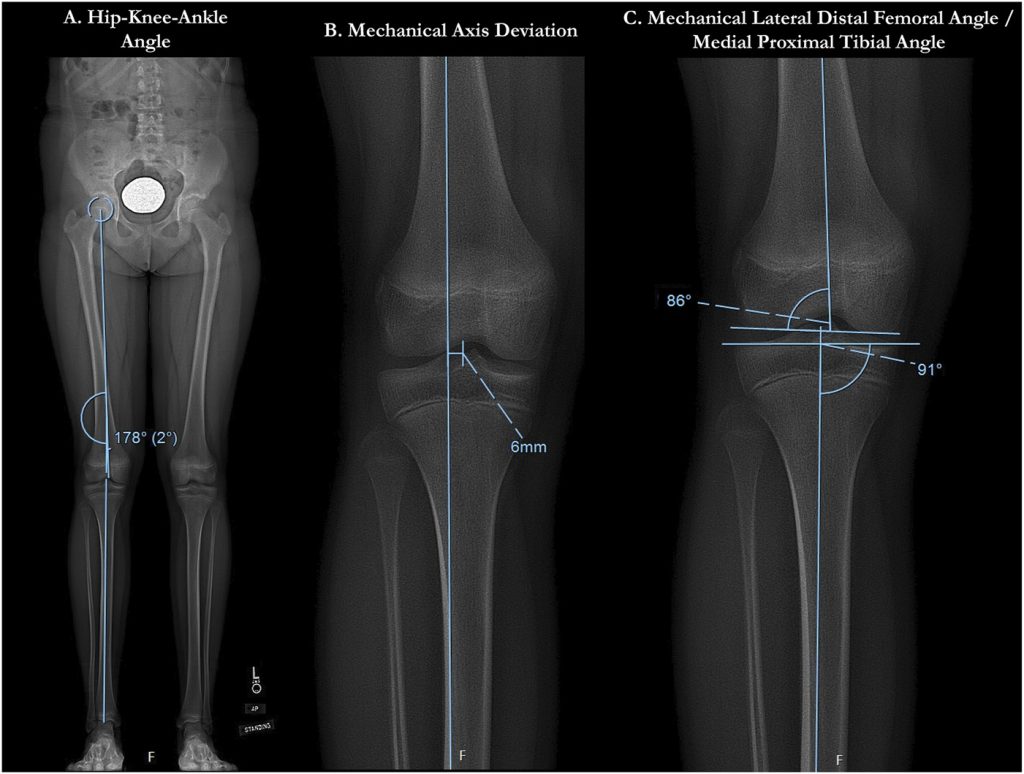
Pediatric and adolescent patients with an ACL tear demonstrated greater valgus alignment than age- and sex-matched controls, with each 1° increase in HKA valgus alignment increasing the odds of an ACL tear by 14%.
CORR Synthesis: The Role of the LET/ALLR in Pediatric and Adolescent ACL Reconstruction-Should All Young Athletes Receive Lateral Augmentation?

The number of ACL injuries continues to grow among pediatric and adolescent patients secondary to increased year-round sports participation and higher competition levels. For children and adolescents, a variety of ACL reconstruction (ACLR) techniques exist, including options for both surgical technique and graft choice.
CORR Synthesis: How Should We Treat Capitellar Osteochondritis Dissecans in Adolescents? An Evidence-based Treatment Algorithm and Clinical Outcomes

Humeral capitellar osteochondritis dissecans (OCD) is a relatively uncommon adolescent disorder that predominantly affects overhead and tumbling athletes. Management of capitellar OCD depends on skeletal maturity, lesion size, location, stability, and containment.
Determination of Skeletal Age From Hand Radiographs Using Deep Learning

Leveraging newer DL technologies trained on >20,000 hand radiographs across 3 distinct, diverse data sets, this study developed a robust model for predicting bone age. Utilizing features extracted from an RSNA model, combined with chronological age inputs, this model outperforms previous state-of-the-art models when applied to validation data sets. These results indicate that the models […]
Methods of Assessing Skeletal Maturity When Planning Surgeries About the Knee

This study sought to review available methods for determination of skeletal age when planning surgeries about the knee using readily available, routine knee imaging. The review focuses on both radiograph and MRI-based skeletal maturity staging systems that surgeons may use to guide appropriate treatment while describing the strengths and weaknesses of each method.
Exploring Outcomes of Tibial Rigid Intramedullary Nailing in Adolescent Patients

This study demonstrated that RIMN for tibial shaft fractures in skeletally immature pediatric patients within 2 years of maturity was not associated with iatrogenic physeal injury and resultant changes in tibial slope. Additional favorable clinical outcomes, the potential for early weight-bearing, and few associated postoperative complications indicate that RIMN is a safe option for skeletally […]
No Association Between Growth Hormone Therapy and Upper Extremity Physeal Tension Injuries: A Matched Case-control Study

Using a matched case-control study design, the present study demonstrated no association between upper extremity physeal injury and growth hormone supplementation therapy in pediatric and adolescent patients. Considering these results, clinicians may not need to advise precaution against sports or other activities that put the upper extremity physes under stress when treating patients with growth […]
Outcomes of grafting extracellular matrix with bone marrow aspirate concentrate in pediatric and adolescent patients with capitellar osteochondritis dissecans

This study demonstrated that ECM-BMAC grafting is a viable treatment strategy for pediatric patients with unstable, contained capitellar OCD lesions. We observed favorable PROs ≥1 year postoperatively with an ~90% RTS rate at an average of 5.8 months, supporting the results of this technique that has demonstrated success in other anatomic regions and adult populations. […]
Length of post-treatment immobilization following medial humeral epicondyle avulsion fracture predicts return of full range of motion

This large multicenter cohort study found that of the variables studied, increased immobilization time was the only independent predictor of residual elbow stiffness following medial epicondyle fractures in children, independent of treatment strategy and receiving PT/OT. With surgical treatment often warranting shorter post-treatment immobilization times, surgery may provide an avenue for consistently regaining full ROM […]
Core psychosocial insights, challenges, and opportunities in the orthopedic surgery care of children and adolescents

Adolescents require psychosocial support from their surgeons, caregivers, and peers in addition to respect for their independence and personal needs.