
Greater Valgus Alignment in Pediatric and Adolescent Patients with a Primary ACL Tear Compared with Healthy Controls
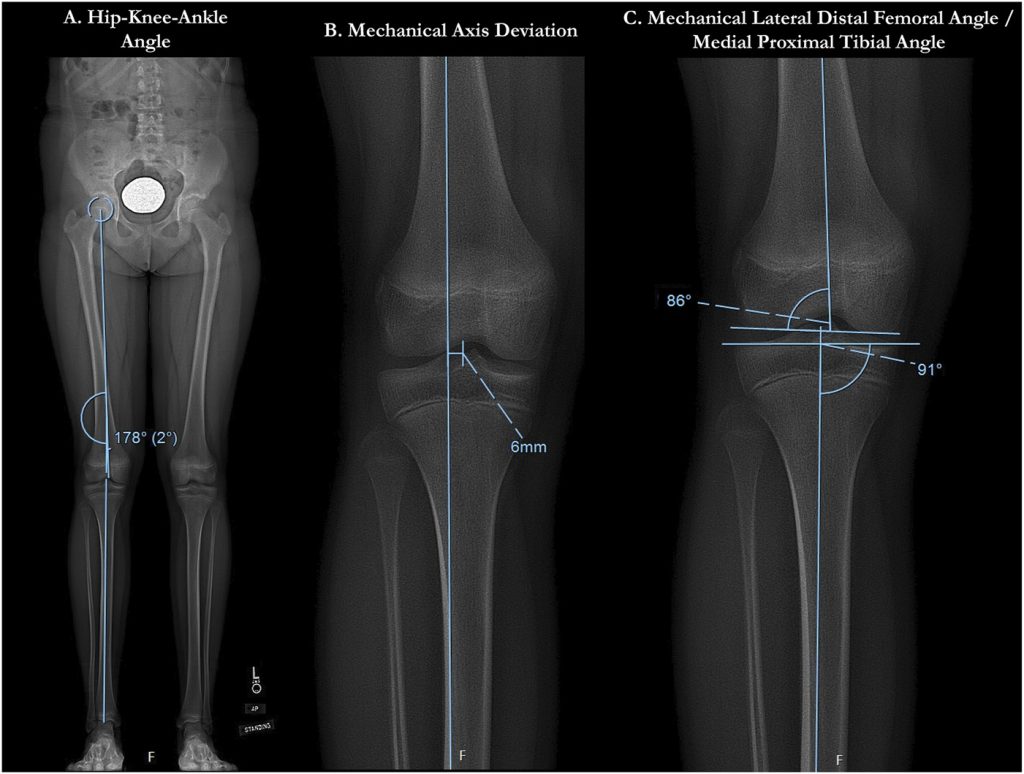
Pediatric and adolescent patients with an ACL tear demonstrated greater valgus alignment than age- and sex-matched controls, with each 1° increase in HKA valgus alignment increasing the odds of an ACL tear by 14%.
CORR Synthesis: The Role of the LET/ALLR in Pediatric and Adolescent ACL Reconstruction-Should All Young Athletes Receive Lateral Augmentation?

The number of ACL injuries continues to grow among pediatric and adolescent patients secondary to increased year-round sports participation and higher competition levels. For children and adolescents, a variety of ACL reconstruction (ACLR) techniques exist, including options for both surgical technique and graft choice.
CORR Synthesis: How Should We Treat Capitellar Osteochondritis Dissecans in Adolescents? An Evidence-based Treatment Algorithm and Clinical Outcomes

Humeral capitellar osteochondritis dissecans (OCD) is a relatively uncommon adolescent disorder that predominantly affects overhead and tumbling athletes. Management of capitellar OCD depends on skeletal maturity, lesion size, location, stability, and containment.
Outcomes of grafting extracellular matrix with bone marrow aspirate concentrate in pediatric and adolescent patients with capitellar osteochondritis dissecans

This study demonstrated that ECM-BMAC grafting is a viable treatment strategy for pediatric patients with unstable, contained capitellar OCD lesions. We observed favorable PROs ≥1 year postoperatively with an ~90% RTS rate at an average of 5.8 months, supporting the results of this technique that has demonstrated success in other anatomic regions and adult populations. […]
Effect of Medial Patellofemoral Complex Reconstruction Technique on Patellofemoral Contact Pressure, Contact Area, and Kinematics

Isolated MPFL reconstruction, isolated MQTFL reconstruction, and combined MPFL/MQTFL reconstruction restored native knee kinematics, contact forces, and contact areas without overconstraint.
Use of Implant-Mediated Guided Growth With Tension Band Plate in Skeletally Immature Patients With Knee Pathology: A Retrospective Review

The implant-mediated guided growth performed in the setting of treating intra-articular knee pathology is feasible and should be considered for skeletally immature patients with coronal plane angular deformity undergoing surgery for concomitant knee pathology.
Transosseous Repair of Isolated Posterior Medial Meniscal Root Injuries in Children and Adolescents

This technical note demonstrates the transosseous repair of isolated posterior medial meniscal root injuries in children and adolescents, including tear visualization on magnetic resonance imaging and during arthroscopy, operative technique, and postoperative management.
Can Return-to-Sport Rates be Taken at Face Value in the Pediatric and Adolescent Sports Literature?

Understanding how rates of sport participation may naturally change during childhood is crucial to interpreting and reporting RTS rates for these patients. We believe that more studies are needed to quantify the many factors affecting natural attrition rates of sport participation in young athletes (by both age and sport) to better study posttreatment RTS and […]
Validation of the ACL-RSI Scale in Pediatric and Adolescent Patients

The ACL-RSI scale is valid to use with pediatric and adolescent patients. The 6-item scale may be a better choice because it has fewer redundancies and minimizes the risk of questionnaire fatigue.
Simultaneous anterior cruciate ligament reconstruction and implant-mediated guided growth to correct genu valgum in skeletally immature patients

The results of the current study indicate that concomitant ACL reconstruction and lower extremity coronal plane angular deformity correction is a safe approach to treat coronal plane angular deformity concomitantly with ACL reconstruction in young patients who present with an acute ACL tear.